
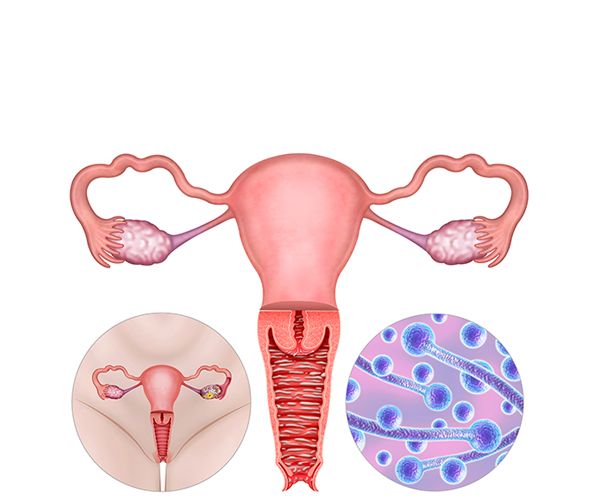



Vaginal candidiasis infection. This image shows a representation of the female genital system, highlighting the affected vaginal area. In this illustration, fungal microorganisms are attached to the tissue. Moreover, the figure emphasizes inflammation and irritation. Together, these elements illustrate the infection process.
Vaginal candidiasis is a fungal condition caused by the overgrowth of Candida albicans. Additionally, this organism is part of the normal flora. However, when balance is disrupted, infection develops. As a result, this condition is common in women.
The main function of vaginal microbiota is to maintain balance and protect against infections. Nevertheless, in this condition, balance is disrupted. Furthermore, the fungus grows excessively. Consequently, inflammation and discomfort occur.
The origin of candidiasis is linked to factors that alter vaginal flora. Moreover, antibiotics, hormonal changes, and immune suppression contribute. Therefore, these conditions promote fungal growth. Additionally, the vaginal environment becomes favorable.
The infection process involves fungal adhesion to the vaginal epithelium. In normal conditions, the immune system controls growth. In contrast, an imbalance allows fungal invasion. As a result, inflammation develops.
Key processes include fungal proliferation, irritation, and inflammatory response. Moreover, symptoms include intense itching, redness, and abnormal discharge. However, discomfort during urination or intercourse may occur.
Regulation requires proper diagnosis. Additionally, treatment includes antifungal medications. Furthermore, hygiene and prevention of risk factors are essential. Together, these measures help prevent recurrence.
In conclusion, vaginal candidiasis is a common condition caused by an imbalance. With proper treatment, symptoms can be relieved and balance restored.