
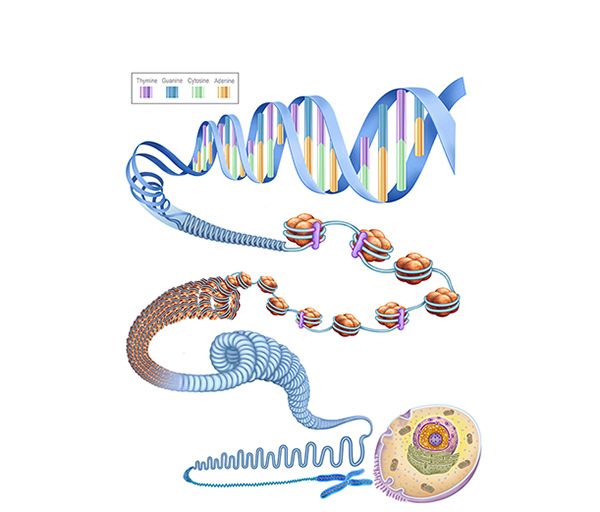



DNA structure and formation. This image shows the molecular organization of genetic material. In this representation, the double helix, nucleotides, nitrogenous bases, and hydrogen bonds are identified. These structures allow the storage and transmission of genetic information.
DNA structure and formation have a general function essential for biological inheritance. Moreover, it contains the information required for cellular function. Additionally, it directs protein synthesis. Furthermore, it regulates development and activity. Overall, it is fundamental for life.
On the other hand, DNA formation occurs through the assembly of nucleotides into chains. These chains consist of sugars, phosphates, and nitrogenous bases. Furthermore, bases pair specifically. Additionally, adenine pairs with thymine and cytosine with guanine. Moreover, this pairing ensures structural stability.
Transport of genetic information occurs through DNA replication. For example, during cell division, the strands separate. Moreover, each strand acts as a template. Additionally, this ensures accurate copying. Furthermore, it guarantees genetic continuity.
Key processes include replication and double helix formation. Moreover, enzymes such as helicase unwind DNA. However, DNA polymerase synthesizes new strands. Additionally, these processes ensure genetic stability. Furthermore, they support inheritance.
Regulation depends on cellular and enzymatic factors. Moreover, regulatory proteins control replication. Additionally, correction mechanisms reduce errors. Furthermore, mutations may occur if regulation fails.
Therefore, DNA structure and formation is essential for life. In conclusion, its organization allows accurate storage, replication, and transmission of genetic information