
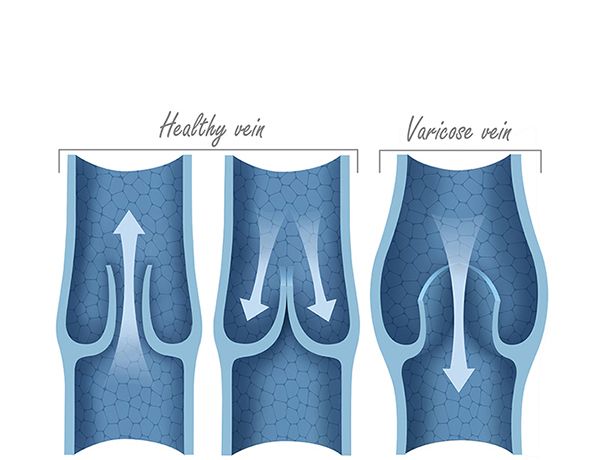



Phases of venous valves. This image shows a comparison between a normal venous valve and a varicose one, highlighting progressive changes in blood flow. In this representation, the healthy vein, varicose vein, venous valves, blood flow, and vessel wall are identified. These structures help explain proper venous return and its alteration. Moreover, this image illustrates normal valve function. Additionally, altered flow in the affected vein is observed. Overall, this representation helps explain venous insufficiency.
The phases of venous valves reflect different functional states of the venous system. Moreover, under normal conditions, valves ensure one-way blood flow toward the heart. Additionally, they prevent reflux. Furthermore, they maintain efficient circulation.
On the other hand, when valves weaken or become damaged, blood flow is disrupted. This causes blood reflux. Moreover, blood accumulates in the veins. Additionally, this leads to progressive dilation and deformation.
Transport of venous blood occurs from the limbs to the heart. For example, muscle contraction supports venous return. Moreover, when valves function properly, flow remains continuous. Additionally, when they fail, the flow becomes slow and inefficient.
Key processes include valve insufficiency and increased venous pressure. Moreover, symptoms such as swelling, heaviness, and pain may appear. However, early stages may show mild symptoms. Additionally, advanced stages may involve visible varicose veins and skin changes.
Regulation depends on circulatory factors and lifestyle habits. Moreover, physical activity improves venous return. Additionally, avoiding prolonged standing helps prevent progression. Furthermore, treatment may include conservative measures or medical interventions.
As a result, venous flow becomes impaired in the varicose phase. Additionally, pressure in superficial veins increases. Moreover, chronic venous insufficiency may develop.
Therefore, phases of venous valves illustrate progression from normal to altered function. In conclusion, understanding these stages is essential for prevention and treatment.