Arthritis
Showing 13–24 of 69 results
-
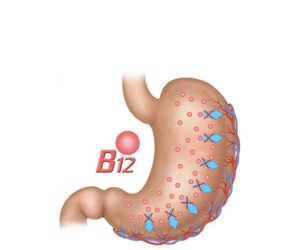
B12 in pernicious anemia
24,50 € Add to basketB12 in pernicious anemia: a disorder caused by the lack of vitamin
B12 absorption in the stomach affects red blood cell formation. It
triggers fatigue and neurological damage, requiring B12 injections to
correct the deficiency and restore the nervous system and blood
function permanently.


-
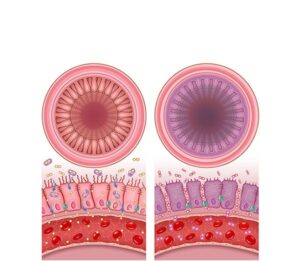
Celiac intestinal disease
24,50 € Add to basketCeliac intestinal disease: an autoimmune disorder where gluten
causes atrophy of the small intestine villi. This prevents nutrient
absorption and generates fatigue, diarrhea, and weight loss. The only
effective treatment is a lifelong gluten-free diet. -
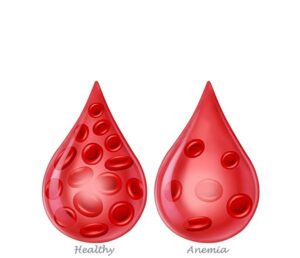
Deficient hemoglobin
24,50 € Add to basketDeficient hemoglobin: an anemic condition where the blood has
few red blood cells or low protein concentration. This reduces the
capacity to transport oxygen to tissues, causing fatigue and pallor.
It requires a medical diagnosis and nutritional -
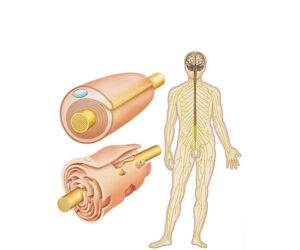
Demyelinating multiple sclerosis
24,50 € Add to basketDemyelinating multiple sclerosis is an autoimmune disease where
the immune system damages the myelin sheath of nerve fibers. This
process disrupts brain signals, causing movement issues, sensitivity
problems, and chronic neurological symptoms. -
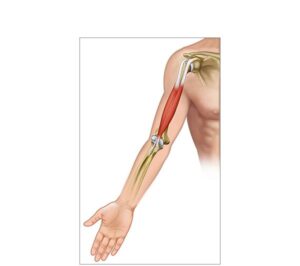
Dermatomyositis and muscle weakness
24,50 € Add to basketDermatomyositis and muscle weakness: an autoimmune
disorder where inflammation damages tissues and reduces muscle
mass. It causes severe motor weakness and progressive atrophy.
Treatment combines immunosuppressive drugs and specialized
physical therapy. -
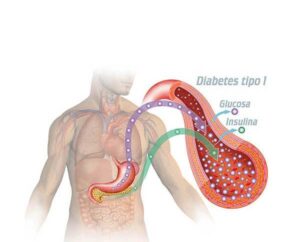
Diabetes mellitus type 1
24,50 € Add to basketDiabetes mellitus type 1: an autoimmune disease where the pancreas
does not produce insulin. The body cannot process glucose, raising sugar
in the bloodstream. It requires the use of daily pumps or injections,
mainly affecting children and young people in their metabolic development. -
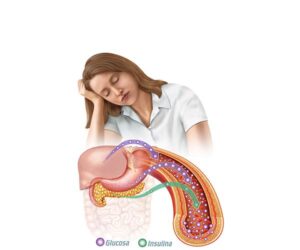
Diabetic person feeling low
24,50 € Add to basketA diabetic person feels low. This realistic illustration analyzes
the biological scenario of insulin resistance. The content explains
how cells respond inefficiently, forcing the pancreas to overwork,
leading to type 2 diabetes under factors like a sedentary lifestyle. -
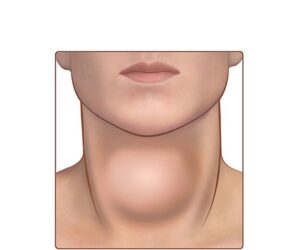
Diffuse thyroid goiter
24,50 € Add to basketDiffuse thyroid goiter defines the uniform enlargement of the
thyroid gland, frequently caused by a lack of iodine. This condition
alters hormonal production, causing fatigue, weight gain, and
visible swelling in the neck area. -
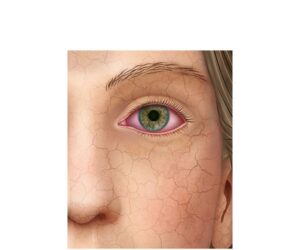
Dryness in Sjögren’s syndrome
24,50 € Add to basketDryness in Sjögren’s syndrome is an autoimmune condition
where the immune system attacks the lacrimal and salivary glands.
This pathology reduces moisture in the eyes and face, causing
persistent irritation, a foreign body sensation, and generalized skin dryness. -
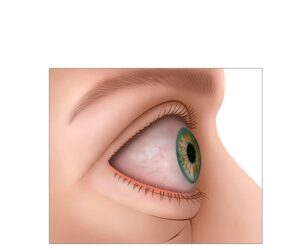
Exophthalmos thyroid eye
24,50 € Add to basketExophthalmos thyroid eye describes the ocular protrusion caused
by an autoimmune response linked to hyperthyroidism. This condition
inflames orbital fat and muscles, resulting in visual and aesthetic
changes known as bulging eyes. -
Eyes in hyperthyroidism
24,50 € Add to basketEyes in hyperthyroidism describe the ocular condition known
as Graves’ disease, characterized by ocular protrusion and dryness.
This disorder, caused by hormone excess, leads to irritation, double
vision, and aesthetic changes. -
Fatigue due to hypothyroidism
24,50 € Add to basketFatigue due to hypothyroidism defines the persistent tiredness
caused by low thyroid hormone production and slow metabolism.
This autoimmune condition reduces cellular energy, affects sleep, and
causes a state of constant physical decay.