Sound
Showing 1–12 of 26 results
-
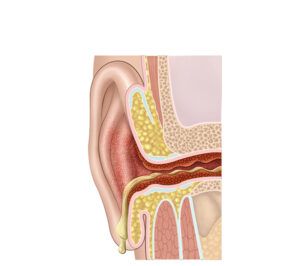
Acute otitis externa
24,50 € Add to basketThe acute otitis externa has an altered function in hearing conduction.
Moreover, under normal conditions, the ear canal protects the inner ear.
Additionally, earwax acts as a natural barrier.


-
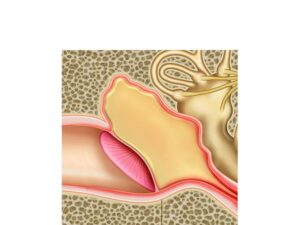
Advanced serous otitis media
24,50 € Add to basketThe advanced serous otitis media has an altered function in
hearing. Moreover, under normal conditions, the middle ear is
air-filled. Additionally, the Eustachian tube regulates pressure.
Furthermore, it impairs sound transmission. -
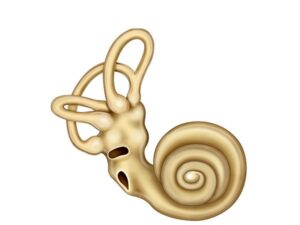
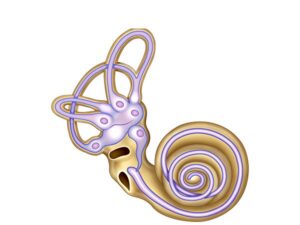
Anatomy of the cochlea
24,50 € Add to basketThe anatomy of the cochlea shows a spiral structure
in the inner ear that contains the organ of Corti. Hair
cells convert sound vibrations into electrical signals,
while fluid-filled chambers respond to different sound
frequencies. -
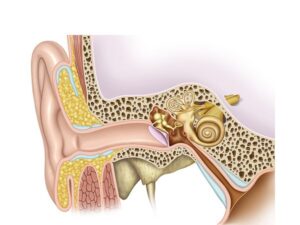
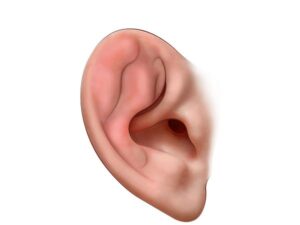
Anatomy of the ear
24,50 € Add to basketThe anatomy of the ear includes the outer, middle, and
inner ear. These structures work together to capture sound,
transmit vibrations, and maintain balance. -
Auricular perichondritis
24,50 € Add to basketThe auricular perichondritis has an altered function in external ear
integrity. Moreover, under normal conditions, the perichondrium
nourishes the cartilage. Additionally, it maintains its structure and
viability. Furthermore, it ensures the shape of the auricle. -
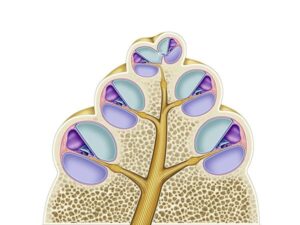
Cochlea cross section
24,50 € Add to basketThe cross-section of the cochlea shows the spiral structure
of the inner ear. It contains the organ of Corti, where hair
cells transform sound vibrations into electrical signals that
allow us to perceive different frequencies and tones. -
Cochlear ducts
24,50 € Add to basketCochlear ducts are spiral structures inside the cochlea of
the inner ear. They contain fluid and the organ of Corti,
where hair cells convert sound vibrations into electrical
signals that allow the brain to detect different sound
frequencies. -
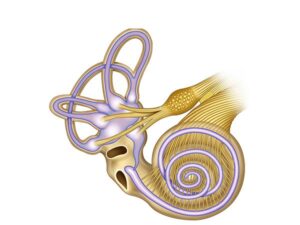
Cochlear vestibular system
24,50 € Add to basketThe vestibulocochlear system connects the cochlea and
the vestibular system with the brain. The cochlea processes
sound, while the vestibular system controls balance and
spatial orientation. -
Eardrum and Cochlea
24,50 € Add to basketThe eardrum and cochlea work together in the hearing
process. The eardrum captures sound waves and sends
vibrations to the inner ear, where the cochlea converts
them into electrical signals interpreted by the brain. -
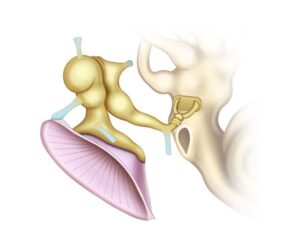
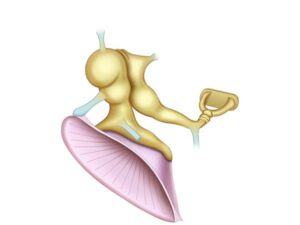
Eardrum and ossicles
24,50 € Add to basketThe tympanic membrane and auditory ossicles work
together to transmit and amplify sound waves. The
malleus, incus, and stapes carry vibrations to the inner
ear, where they become electrical signals interpreted
by the brain. -
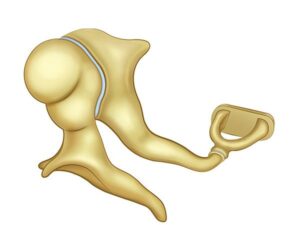
Middle ear bones
24,50 € Add to basketMiddle ear ossicles, the malleus, incus, and stapes,
transmit and amplify sound vibrations from the eardrum
to the inner ear. This process allows sound waves to be
converted into electrical signals that the brain interprets
as sound. -
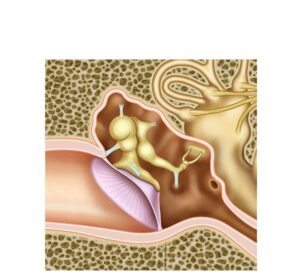
Middle ear structure
24,50 € Add to basketThe middle ear is located in the tympanic cavity and
contains the eardrum and auditory ossicles. These
structures transmit and amplify sound vibrations toward
the inner ear, allowing efficient hearing and proper
sound processing.