
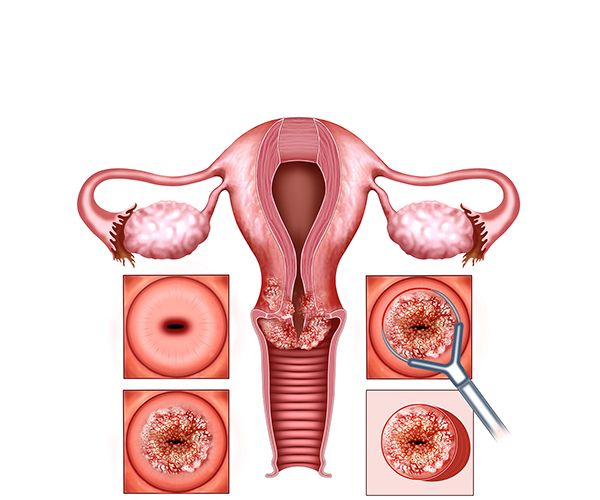



Cervical tumor treatment. This image shows a representation of the uterus with different cervical conditions, including a healthy cervix and tumor-affected areas. In this illustration, structural changes are visible. Moreover, the figure highlights treatment options. Together, these elements illustrate medical management.
Cervical tumor treatment depends mainly on the cancer stage. Additionally, multiple therapeutic options are available. However, the choice varies according to disease extent. As a result, the patient’s condition is also considered.
The main function of the cervix is to connect the uterus to the vagina. Nevertheless, tumor development disrupts this function. Furthermore, malignant cells invade tissue. Consequently, treatment is required.
The origin of cervical cancer is linked to persistent human papillomavirus infection. Moreover, this infection causes cellular changes. Therefore, these may progress to cancer. Additionally, immune factors play a role.
Tumor management includes different strategies. In the early stages, surgery may remove the tumor. In contrast, advanced stages require radiotherapy or chemotherapy. As a result, combined treatments are used.
Key processes include tumor removal, destruction of malignant cells, and control of spread. Moreover, symptoms include abnormal bleeding and pelvic pain. However, the response varies.
Regulation requires specialized medical evaluation. Additionally, factors such as age and health are considered. Furthermore, follow-up is essential. Together, these measures improve prognosis.
In conclusion, cervical tumor treatment varies by stage. With proper care, disease control, and quality of life improves.