
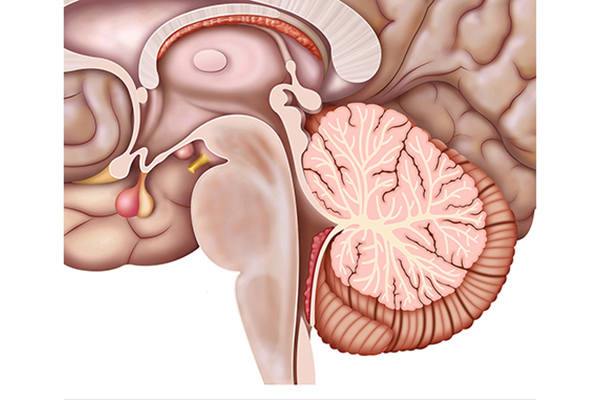



This illustration shows the brainstem in a way that helps us understand its importance. First, the brainstem is vital because it controls many basic functions we rely on every day. Additionally, it sits at the base of the brain and connects the encephalon with the spinal cord. Therefore, it acts as an essential pathway for communication between the brain and the body.
Moreover, the brainstem is composed of three main parts: the medulla oblongata, the pons, and the midbrain. Each of these regions has specific roles, yet they work together to keep the body functioning properly. In fact, they help maintain homeostasis, which is the body’s ability to stay balanced.
For example, the medulla oblongata regulates breathing, heart rate, and blood pressure. Consequently, these functions are crucial for survival. Similarly, the pons helps regulate sleep and respiration while also supporting communication between the brain and the cerebellum. In this way, it contributes to coordination and physiological stability.
Furthermore, the midbrain plays a role in visual and auditory reflexes. It also assists in movement control and alertness. Thus, it integrates sensory and motor functions that are essential for daily behavior.
Overall, the brainstem serves as a vital center for automatic processes and communication. Finally, studying its structure and functions is important in neuroscience and medicine. It helps us better understand neurological disorders and how the nervous system supports life.