
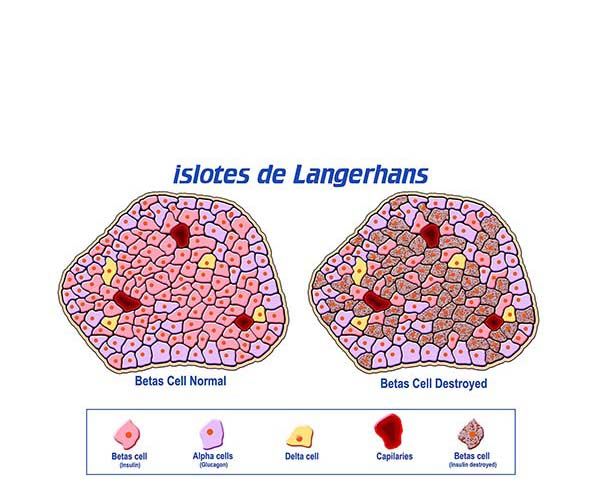



Islets of Langerhans in diabetes represent the core of metabolic control within the human body due to their fundamental endocrine function. Firstly, it is necessary to explain that these structures are specialized groups of pancreatic cells. Therefore, their health is determinant for the production of insulin, which regulates sugar. However, in type 1 diabetes, the immune system mistakenly identifies these cells as threats. Consequently, the organism attacks and destroys the islets irreversibly and aggressively.
Furthermore, the deterioration of these cellular groups is also a key factor in type 2 diabetes. Consequently, insulin resistance causes the function of the islets to become exhausted over time. It is fundamental to highlight that the illustration shows the direct relationship between cellular damage and poor regulation of glucose. On the other hand, when the pancreas cannot release hormones, sugar accumulates dangerously in the bloodstream. Nevertheless, advances in regenerative medicine now seek to protect these valuable tissues.
Likewise, deep knowledge about the islets of Langerhans in diabetes allows for the development of much more effective treatments for patients. It is essential to understand that the failure of these cells prevents the body from transforming food into useful energy. As a result, glucose control becomes a constant external task. Therefore, education about pancreatic anatomy helps to understand why treatment is so necessary. In conclusion, the preservation of the islets is the main objective of current scientific research. Science seeks to avoid immunological destruction to restore metabolic health naturally and definitively.
Finally, understanding the role of beta cells within these islets facilitates the prevention of severe complications. Educated patients achieve better results in their daily sugar levels. Meanwhile, new transplant therapies offer real hope for recovering the hormonal function lost to the disease.