
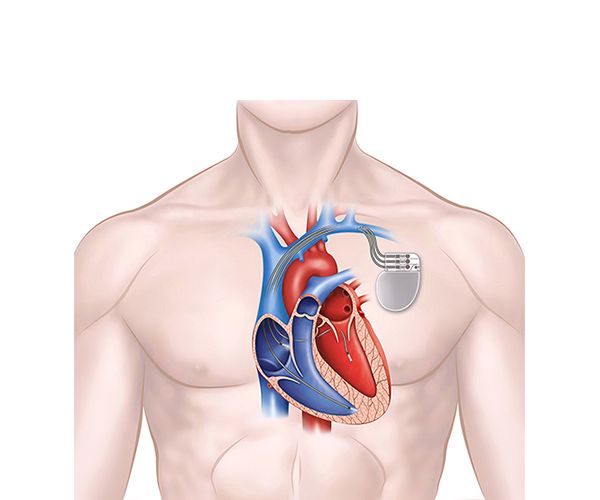



Triple-chamber pacemaker. This image shows a medical device implanted in the heart that stimulates both atria and ventricles to coordinate electrical activity. In this representation, the heart, atria, ventricles, electrodes, and pacemaker generator are identified. These structures enable cardiac synchronization. Moreover, this image illustrates the placement of multiple electrodes. Additionally, simultaneous stimulation is observed. Overall, this representation helps explain the device’s function.
The triple-chamber pacemaker has a general function in optimizing cardiac synchronization. Moreover, under normal conditions, the electrical system coordinates contractions. Additionally, it allows efficient heartbeats. Furthermore, it ensures proper cardiac output.
On the other hand, this device is used in patients with heart failure. It is also used in complex conduction disorders. Moreover, it improves coordination between atria and ventricles. Additionally, it corrects cardiac dyssynchrony.
Transport of blood occurs through the heart chambers. For example, atria receive blood and ventricles pump it. Moreover, when coordination is impaired, this process is affected. Additionally, the pacemaker restores synchrony.
Key processes include coordinated electrical stimulation and cardiac resynchronization. Moreover, cardiac function is improved. However, fatigue is also reduced. Additionally, patient functional capacity improves.
Regulation depends on device programming and clinical condition. Moreover, medical follow-up is essential. Additionally, adjustments optimize performance. Furthermore, its use is safe and effective.
As a result, cardiac efficiency increases. Additionally, symptoms decrease. Moreover, patient quality of life improves.
Therefore, the triple-chamber pacemaker is an advanced therapeutic tool. In conclusion, it improves cardiac synchronization and is essential in heart failure treatment.