
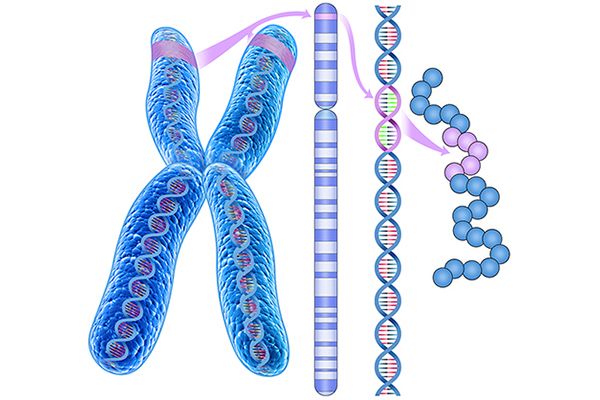



Huntington’s disease (HD) is a hereditary neurodegenerative disorder that progressively affects the nervous system. This condition is caused by a mutation in the HTT gene, which is located on chromosome 4. The HTT gene provides the instructions for producing a protein called huntingtin, which normally plays an important role in several cellular processes within neurons.
In Huntington’s disease, a specific alteration occurs in the genetic sequence of the HTT gene. This mutation involves an abnormal expansion of the CAG trinucleotide repeat, composed of the nucleotides cytosine, adenine, and guanine. Under normal conditions, this sequence repeats several times within the gene. However, when the number of CAG repeats exceeds approximately 36 to 40 repetitions, the resulting huntingtin protein becomes structurally abnormal.
As a consequence of this genetic mutation, the huntingtin protein becomes toxic to nerve cells. Over time, the altered protein accumulates inside neurons and disrupts several essential cellular processes. This progressive damage leads to degeneration and death of specific neuronal populations, particularly in brain regions such as the striatum, which is part of the basal ganglia.
Furthermore, Huntington’s disease follows an autosomal dominant inheritance pattern. This means that inheriting a single copy of the mutated gene from one parent is enough for the disorder to develop. Because of this inheritance pattern, each child of an affected individual has approximately a 50 percent chance of inheriting the mutation.
As the disease progresses, characteristic neurological and cognitive symptoms begin to appear. These symptoms often include involuntary movements known as chorea, difficulties with coordination and balance, and gradual impairment of cognitive functions. Behavioral changes and mood disorders may also develop during the course of the condition.
Overall, Huntington’s disease represents a clear example of a neurodegenerative disorder caused by a specific genetic mutation. The abnormal expansion of the HTT gene and the accumulation of toxic huntingtin protein ultimately lead to progressive neuronal damage affecting movement, cognition, and behavior.