Circulatory
Showing 25–36 of 95 results
-
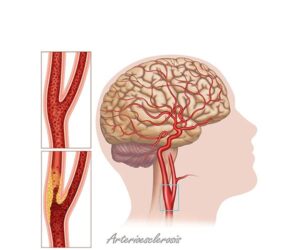
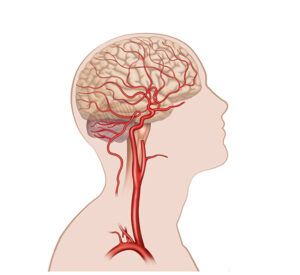
Carotid artery stenosis
24,50 € Add to basketCarotid artery stenosis. Narrowing of the main artery that carries blood to
the brain by the accumulation of plaques, reducing the blood supply flow
and increasing the risk of stroke, requiring timely diagnosis and treatment.


-
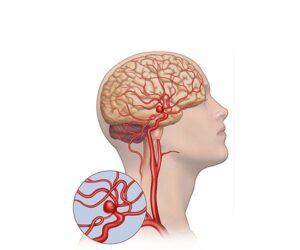
Cerebral aneurysms
24,50 € Add to basketA brain aneurysm is a weak bulge in the wall of an artery in the
brain. If it grows, it can rupture and cause severe bleeding. He
often has no symptoms until he is detected in tests or it breaks. -
Cerebral aneurysms
24,50 € Add to basketCerebral aneurysms are bulges in the blood vessels in the brain
that can rupture and cause a stroke. Many have no symptoms,
but early detection and their detection and treatment are vital to
avoid serious neurological damage. -
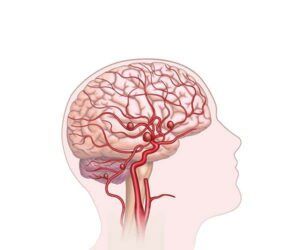
Cerebral arterial aneurysm
24,50 € Add to basketA cerebral arterial aneurysm, this is a dilation in a cerebral
blood vessel similar to a balloon. Your breakup is an emergency,
a medical condition known as a hemorrhagic stroke. The control
of blood pressure is key to preventing complications. -
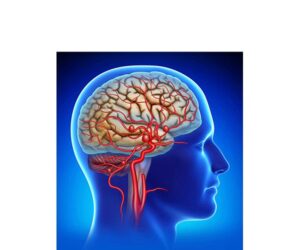
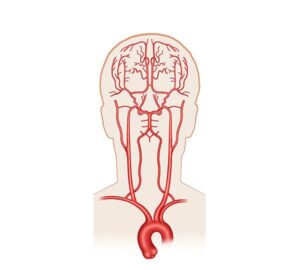
Cerebral arterial irrigation
24,50 € Add to basketCerebral arterial irrigation. This illustration describes the supply
of oxygen-rich blood through the main arteries to the brain. The
diagram shows how the internal carotids and vertebrals nourish the
tissue, being a vital process for maintaining healthy neurological function. -
Cerebral blood circulation
24,50 € Add to basketCerebral blood circulation. This illustration represents the flow
of oxygenated blood from the arteries to the capillaries for nutrient
exchange. The graphic shows how veins return deoxygenated blood
to the heart, facilitating the understanding of cellular perfusion. -
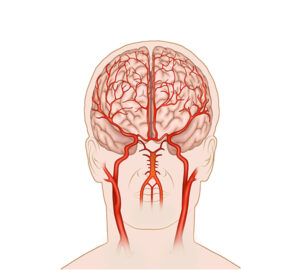
Cerebral carotid irrigation
24,50 € Add to basketCerebral carotid irrigation. This illustration shows the blood
supply through the internal carotids and vertebral arteries connected
by the Circle of Willis. The diagram details how the internal carotid
nourishes the forebrain and the upper lobes for cognitive function. -
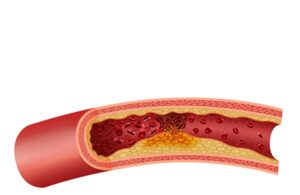
Cholesterol plaque rupture
24,50 € Add to basketRupture of cholesterol plaque. The atherosclerotic plaque ruptures
and generates a clot that blocks blood flow, increasing the risk of heart
attack and stroke, requiring urgent medical attention. -
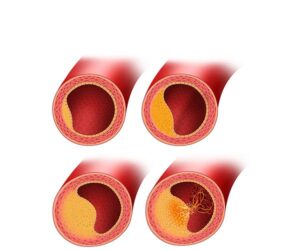
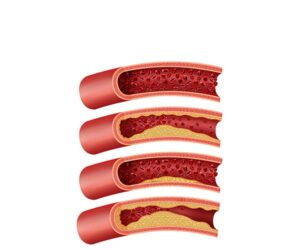
Cholesterol stages
24,50 € Add to basketCholesterol stages show progressive lipid buildup in arteries,
leading to plaque formation, reduced blood flow, and increased
cardiovascular risk, often without symptoms in early stages. -
Cholesterol stages
24,50 € Add to basketCholesterol stages illustrate progressive lipid buildup in arteries,
leading to plaque formation, reduced blood flow, and increased
cardiovascular risk, often without symptoms in early stages. -
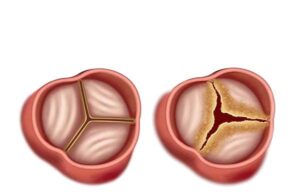
Closed aortic stenosis
24,50 € Add to basketThe closed aortic stenosis has an altered function in cardiac
dynamics. Moreover, under normal conditions, the aortic valve
regulates blood flow into the aorta. Additionally, it prevents
backflow into the left ventricle. -
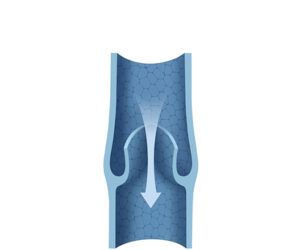
Damaged venous valve
24,50 € Add to basketDamaged venous valve causes blood reflux and pooling, increasing
venous pressure and leading to swelling, pain, and varicose veins
associated with venous insufficiency.