Disorders
Showing 61–72 of 72 results
-
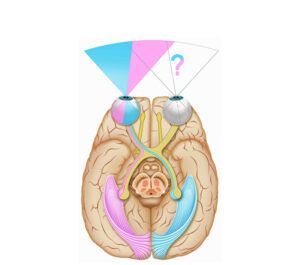
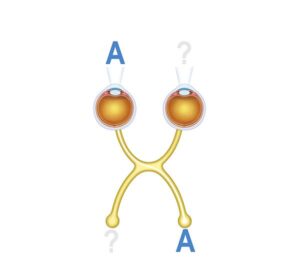
The amblyopic vision
24,50 € Add to basketThe vision in amblyopia, also called “lazy eye“, shows a
condition in which one of the eyes does not develop properly
in childhood, resulting in decreased vision even with optical
correction.


-
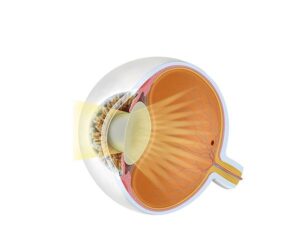
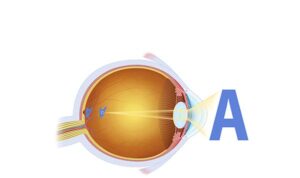
The cataract focusing
24,50 € Add to basketThe cataract approach illustrates how clouding of the lens
affects vision. In a cataract, the lens loses its transparency,
hindering the passage of light to the retina and causing
blurred or cloudy vision. -
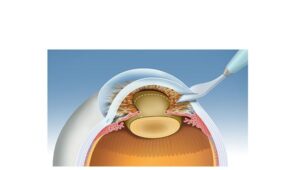
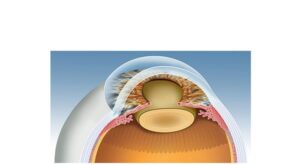
The cataract surgery
24,50 € Add to basketCataract surgery shows the first step of the procedure. A small
opening is made in the cornea to access the cloudy lens. Through
this incision, an ultrasound device is inserted to break up and
remove the damaged lens. -
The glaucoma
24,50 € Add to basketOcular glaucoma represents a condition characterized by an increase
in intraocular pressure, which can damage the optic nerve and cause
vision loss. The accumulation of aqueous humor due to inefficient
drainage is shown. -
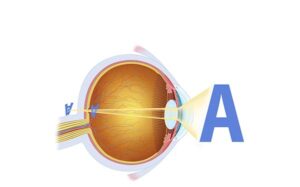
The hyperopia vision
24,50 € Add to basketFarsighted vision, or distance vision, is an eye condition where
nearby objects appear blurry because the image forms behind
the retina. This usually happens due to a shorter eye or a flatter
cornea. -
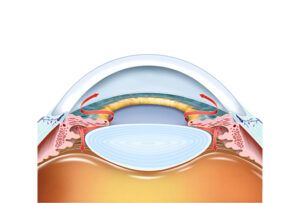
The lens opacity
24,50 € Add to basketLens opacity in cataracts. Loss of transparency in the eye
lens blocks light reaching the retina, causing blurred vision,
glare, and difficulty distinguishing colors. -
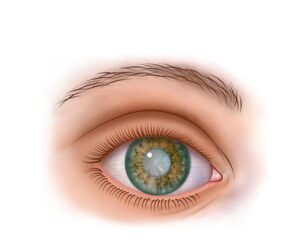
The lens with cataracts
24,50 € Add to basketLens opacity. This is the characteristic of an eye with cataracts,
characterized by an opaque lens that hinders the passage of light
to the retina. The lens, which is normally transparent, becomes
cloudy due to the accumulation of proteins, causing blurred vision. -
The myopia vision
24,50 € Add to basketMyopia is an eye condition in which nearby objects are seen clearly,
but distant ones appear blurred. This happens because the image
forms in front of the retina, usually due to a longer eyeball or a more
curved cornea. -
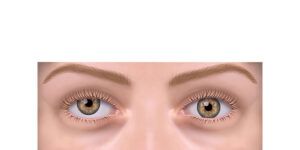
The strabismic eyes
24,50 € Add to basketThe eye in strabismus hypertropia is a type of strabismus in
which one eye is deflected upwards compared to the other
This can cause double vision and visual coordination problems. -
Visual amblyopia
24,50 € Add to basketVisual amblyopia, also known as “lazy eye“, is a condition in which
one eye does not develop properly during childhood. May result in
reduced vision in that eye, even with optical correction. -
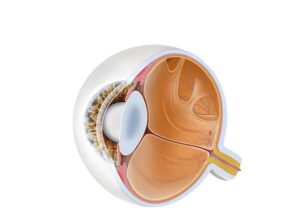
Vitreous detachment
24,50 € Add to basketVitreous detachment shows how the vitreous gel, which fills the
eye cavity, separates from the retina. As we age, the vitreous can
become more liquid and gradually separate from the retina, which
can cause flashes of light or the perception of floaters. -
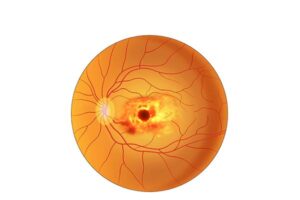
Wet Macular Degeneration
24,50 € Add to basketWet macular degeneration (AMD), in which abnormal blood
vessels grow beneath the retina, leading to leakage of fluid or blood.
This buildup of fluid can damage the macula and severely affect central
vision. It is characterized by neovascularization and leakage, explaining
the rapid loss of central vision and macular damage.