Disorders
Showing 1–12 of 72 results
-
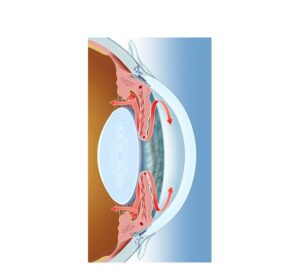
Altered aqueous humor drainage
24,50 € Add to basketAlteration of aqueous humor drainage in an eye with glaucoma. It
shows how a blockage in the trabecular meshwork or in Schlemm’s
canal prevents proper fluid flow, causing an increase in intraocular
pressure.


-
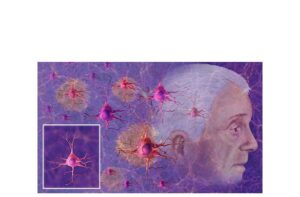
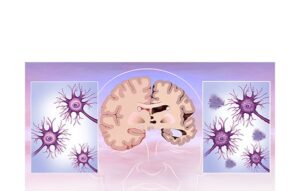
Alzheimer’s neuronal deterioration
24,50 € Add to basketThe neuronal degeneration in Alzheimer’s disease has an altered
function in the nervous system. Moreover, under normal conditions,
neurons communicate efficiently. Additionally, they support memory
consolidation. -
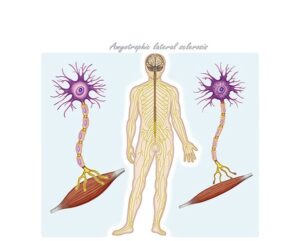
Amyotrophic lateral sclerosis (ALS)
24,50 € Add to basketAmyotrophic lateral sclerosis is a progressive degeneration of
motor neurons. These neurons are located in the motor cortex
and the spinal cord. In addition, its deterioration interrupts the
signal transmission. -
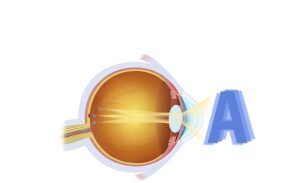
Astigmatism vision
24,50 € Add to basketAstigmatism affects vision. People with astigmatism see things
blurry and distorted, and have trouble focusing both up close and
far away. Glasses, contact lenses, and refractive procedures like
laser surgery can correct astigmatism. -
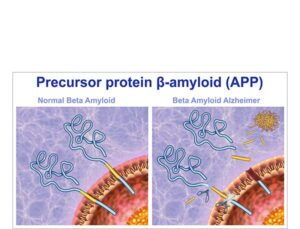
Beta-amyloid protein in Alzheimer’s disease
24,50 € Add to basketThe beta-amyloid protein in Alzheimer’s disease has an altered
function in the nervous system. Moreover, under normal conditions,
proteins are properly processed. Additionally, neurons maintain
efficient communication. -
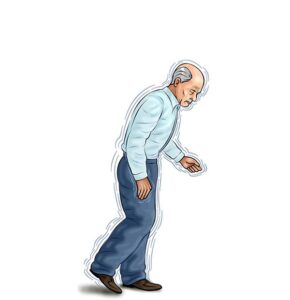
Body tremor in Parkinson’s disease
24,50 € Add to basketThe body tremor in Parkinson’s disease has an altered function
in motor control. Moreover, under normal conditions, dopamine
regulates voluntary movements. Additionally, it allows smooth
and coordinated execution. -
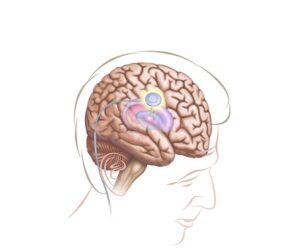
Brain stimulator in Parkinson’s disease
24,50 € Add to basketThe brain stimulator in Parkinson’s disease has a therapeutic
function in controlling motor symptoms. Moreover, under normal
conditions, dopamine regulates voluntary movement. -
Brain with Alzheimer’s disease
24,50 € Add to basketThe brain with Alzheimer‘s. In this representation, the cerebral
hemispheres are compared between a healthy brain and another
neuron, beta-amyloid plaques affected by Alzheimer’s, the
neurofibrillary tangles of tau, and the cerebral cortex. -
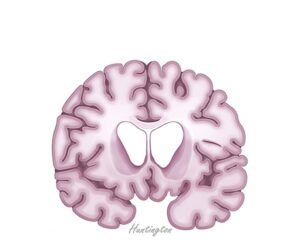
Brain with Huntington’s disease
24,50 € Add to basketThe brain with Huntington’s disease has an altered function in
the nervous system. Moreover, under normal conditions, neurons
maintain efficient communication. Additionally, they support motor
control and cognitive functions. -
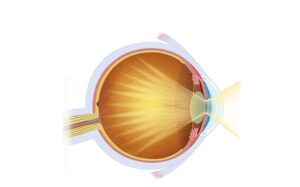
Cataract focusing
24,50 € Add to basketThe cataract focuses. This is affected when the lens, the eye’s
natural lens, becomes cloudy. Cataracts can blur vision, cause hazy
sight, and impair the ability to focus properly. -
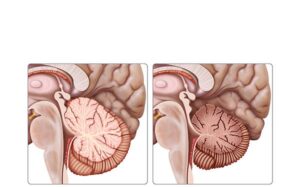
Cerebellar hypoplasia
24,50 € Add to basketThe cerebellar hypoplasia has an altered function in motor control.
Moreover, under normal conditions, the cerebellum regulates
coordination and balance. Additionally, it allows precise and smooth
movements. Furthermore, it maintains body stability. -
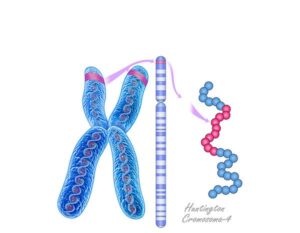
Chromosome 4
24,50 € Add to basketChromosome 4 has an essential function in genetic inheritance.
Moreover, it contains multiple genes that regulate cellular functions.
Additionally, it participates in protein synthesis. Furthermore, it
contributes to organism development and function.