Vision
Showing 49–60 of 67 results
-
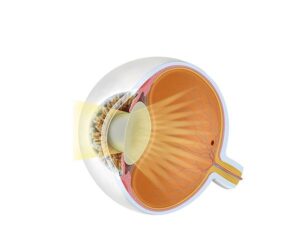
The cataract focusing
24,50 € Add to basketThe cataract approach illustrates how clouding of the lens
affects vision. In a cataract, the lens loses its transparency,
hindering the passage of light to the retina and causing
blurred or cloudy vision.


-
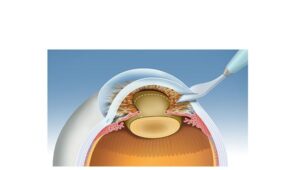
The cataract surgery
24,50 € Add to basketCataract surgery shows the first step of the procedure. A small
opening is made in the cornea to access the cloudy lens. Through
this incision, an ultrasound device is inserted to break up and
remove the damaged lens. -
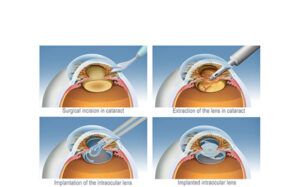
The cataract surgery process
24,50 € Add to basketCataract surgery process. The process details the extraction of
the opaque lens through ultrasound phacoemulsification and
its subsequent replacement with an artificial intraocular lens.
The intervention is a brief surgical procedure to restore clear
vision for the patients. -
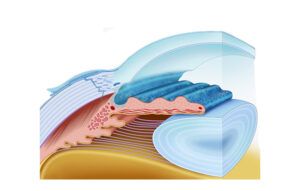
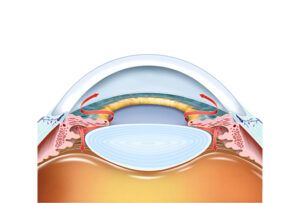
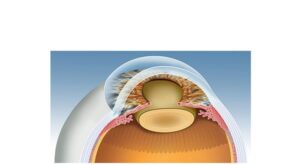
The cornea and iris
24,50 € Add to basketThe cornea and iris are anterior eye structures that control
light entry and help focus images on the retina. The cornea
refracts light while the iris regulates pupil size to adapt vision
to different lighting conditions. -
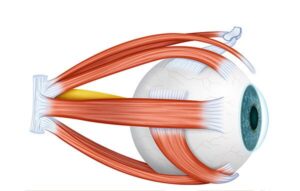
The eye muscles
24,50 € Add to basketOcular muscles control eye position and movement. Six
muscles work together to produce vertical, horizontal, and
rotational movements, allowing coordinated gaze and stable
visual tracking. -
The glaucoma
24,50 € Add to basketOcular glaucoma represents a condition characterized by an increase
in intraocular pressure, which can damage the optic nerve and cause
vision loss. The accumulation of aqueous humor due to inefficient
drainage is shown. -
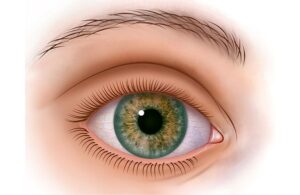
The human eye
24,50 € Add to basketThe external anatomy of the eye includes the cornea,
sclera, iris, pupil, and eyelids that protect the eye and
regulate the entry of light. -
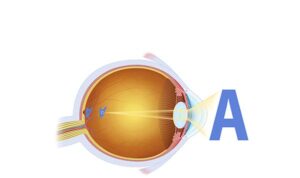
The hyperopia vision
24,50 € Add to basketFarsighted vision, or distance vision, is an eye condition where
nearby objects appear blurry because the image forms behind
the retina. This usually happens due to a shorter eye or a flatter
cornea. -
The lens opacity
24,50 € Add to basketLens opacity in cataracts. Loss of transparency in the eye
lens blocks light reaching the retina, causing blurred vision,
glare, and difficulty distinguishing colors. -
The myopia vision
24,50 € Add to basketMyopia is an eye condition in which nearby objects are seen clearly,
but distant ones appear blurred. This happens because the image
forms in front of the retina, usually due to a longer eyeball or a more
curved cornea. -
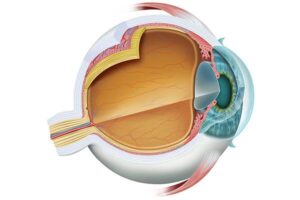
The ocular anatomy
24,50 € Add to basketOcular anatomy includes the cornea, iris, pupil, lens,
retina, and optic nerve. These structures work together
to focus light, convert it into nerve signals, and allow
visual perception. -
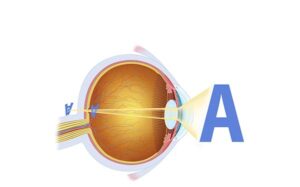
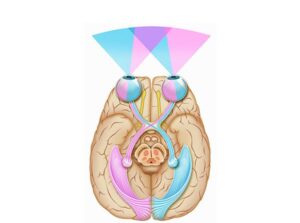
The physiology of vision
24,50 € Add to basketVisual physiology explains how the eye focuses light on
the retina converts it into nerve signals that the brain
interprets as images, allowing the perception of color,
shape and detail.