
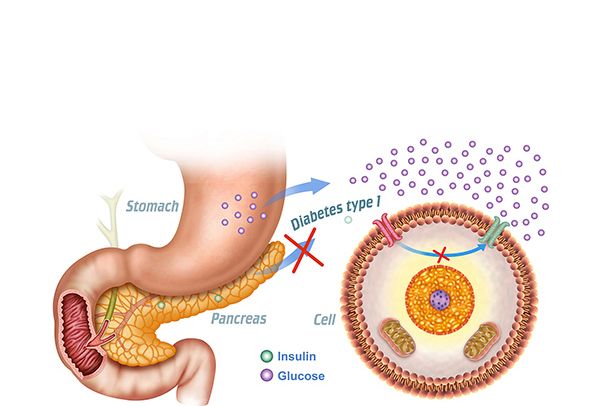



Autoimmune type 1 diabetes is a chronic condition that arises when the body’s defense system mistakenly attacks its own tissues. Firstly, it is necessary to identify that this destructive process occurs specifically in the beta cells of the pancreas. Therefore, the body permanently loses its ability to generate the hormone necessary for metabolism. Consequently, an absolute body’s inability to regulate the energy that comes from the foods ingested daily.
Furthermore, the visual layout of the torso allows observing the relationship between the stomach and the absorption processes of essential nutrients. It is fundamental to highlight that, in this representation, the scarce insulin particles available to the organism are clearly visualized. On the other hand, glucose particles remain accumulated outside the cell due to the lack of this hormonal transport. Consequently, sugar cannot be transformed into useful fuel for vital organs. Nevertheless, early diagnosis allows for starting immediate and effective clinical control.
Likewise, the comprehensive treatment of this pathology involves several fundamental pillars to maintain the patient’s stability. It is essential to make profound modifications to the diet to manage the glycemic load of each meal. Therefore, regular exercise becomes a vital ally to improve cellular sensitivity and cardiovascular health. In some cases, the use of advanced medications is required to stabilize blood sugar levels. Consequently, diabetes education is a powerful tool to prevent future complications.
In conclusion, understanding the dynamics of autoimmune type 1 diabetes is the first step toward a healthy coexistence with the disease. Medical science continues to research new cellular therapies to restore lost pancreatic function. Meanwhile, constant monitoring and discipline in daily habits guarantee a full life for those affected. Current technology facilitates the rigorous tracking of each metabolic parameter easily. In short, the patient’s commitment to their well-being is the most determining factor for achieving long-term therapeutic success.