
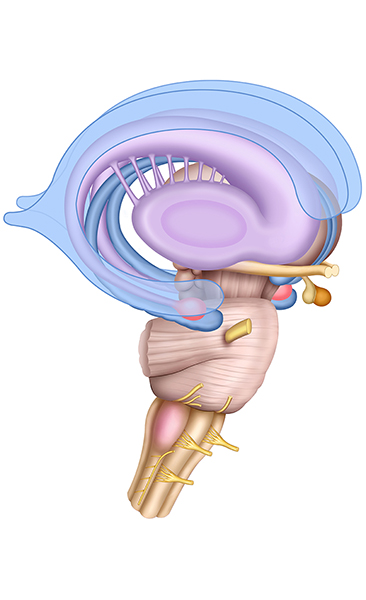



Limbic system anatomy comprises a set of brain structures involved in regulating emotions, memory, and motivation. First, this system includes the hippocampus, the amygdala, and the hypothalamus. Additionally, each of these regions plays a key role in behavior and stress responses. Therefore, the limbic system is fundamental for environmental adaptation.
Moreover, the hippocampus participates in memory formation and consolidation. In fact, it allows information to be stored and retrieved when necessary. On the other hand, the amygdala regulates emotional responses, especially to threatening stimuli. Consequently, it enables rapid reactions that support survival.
Furthermore, the hypothalamus links emotional states with physiological responses. For example, it regulates processes such as hunger, sleep, and hormonal responses to stress. In this way, it integrates emotional and bodily functions.
Meanwhile, the brainstem connects the brain to the spinal cord. Additionally, it controls vital functions such as breathing, heart rate, and reflexes. In this sense, it acts as an automatic regulatory center essential for life.
Overall, the limbic system and the brainstem serve different but complementary roles. While the limbic system governs emotional and motivational processes, the brainstem regulates basic survival functions. However, both structures work together to maintain nervous system stability. Therefore, their interaction ensures balance between emotion, cognition, and physiology.
Finally, the limbic system and brainstem are essential for the integrated functioning of the nervous system. In conclusion, their proper operation supports survival and appropriate responses to environmental stimuli.