
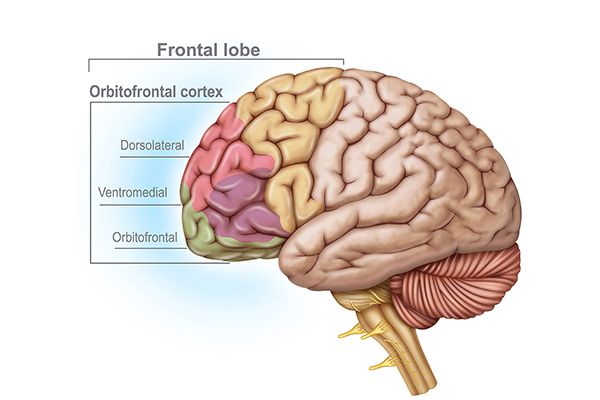



The frontal lobe is one of the most important regions of the human brain and plays a crucial role in many cognitive and motor functions. This brain region is located in the anterior part of the cerebral cortex and is responsible for coordinating complex behaviors and voluntary actions. Through its intricate network of neurons, the frontal lobe contributes to planning activities, regulating behavior, and controlling voluntary movement.
Several specialized areas participate in the physiological functions of this region. One of its primary roles involves the planning and organization of complex tasks. These abilities allow individuals to set goals, analyze situations, and develop strategies to solve problems in everyday life.
In addition, this cortical area is closely involved in the control of voluntary movement. Motor regions located within the frontal lobe generate signals that travel through neural pathways toward muscles. As a result, the body can perform coordinated and purposeful movements. This process allows the brain to regulate posture, motion, and precise physical actions.
Another important function associated with this region relates to short-term memory and reasoning. These cognitive abilities make it possible to temporarily retain information, analyze it, and use it during decision-making processes. Furthermore, the frontal lobe contributes to language production, communication, and aspects of verbal expression.
A particularly significant part of this region is the prefrontal cortex, which is responsible for higher executive functions. This area coordinates complex processes such as decision making, impulse control, emotional regulation, and behavioral adaptation to different situations.
Overall, the frontal lobe acts as an integration center for multiple mental and motor processes. Through its activity, the brain can plan actions, evaluate consequences, and regulate behavior. For this reason, this region plays a central role in human cognition and adaptive behavior.