
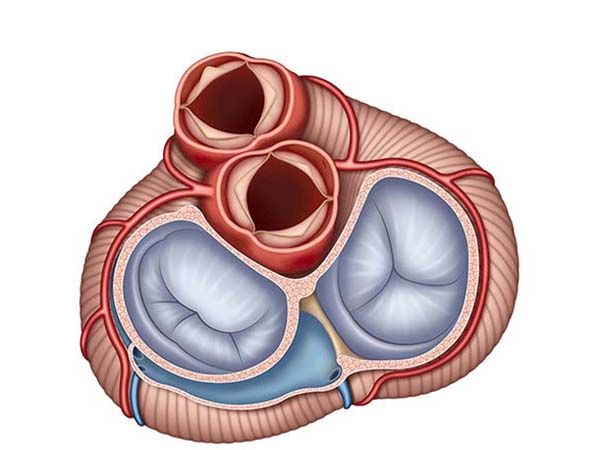



Open heart valves represent an important phase of the cardiac cycle. During this stage, blood can move between heart chambers and major arteries.
First, the heart valves are key structures of the cardiovascular system. They regulate blood flow and prevent blood from flowing backward.
The heart contains four main valves that guide circulation. These valves are the mitral valve, tricuspid valve, aortic valve, and pulmonary valve.
The atrioventricular valves are located between the atria and ventricles. These include the tricuspid valve and the mitral valve.
The tricuspid valve lies between the right atrium and the right ventricle. When this valve opens, blood flows into the right ventricle.
Similarly, the mitral valve connects the left atrium with the left ventricle. Therefore, oxygenated blood can move into the ventricle.
In addition, the heart contains semilunar valves that control blood leaving the ventricles. These valves include the pulmonary and aortic valves.
The pulmonary valve is located between the right ventricle and the pulmonary artery. Consequently, blood can travel toward the lungs.
Meanwhile, the aortic valve is positioned between the left ventricle and the aorta. As a result, oxygenated blood moves into the systemic circulation.
Heart valves open and close in a coordinated rhythm during each heartbeat. Because of this coordination, blood flows in one direction.
Furthermore, this mechanism prevents blood from returning to previous chambers. Therefore, circulation remains efficient and organized.
Finally, open heart valves allow smooth blood movement through the heart. This process supports proper cardiovascular function and effective circulation.