Anatomy
Showing 385–396 of 678 results
-
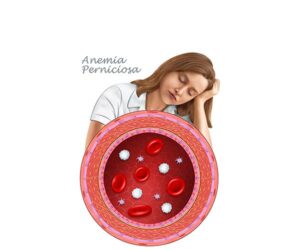
Pernicious anemia
24,50 € Add to basketPernicious anemia: an autoimmune disease in which antibodies attack
the stomach, preventing the absorption of vitamin B12. This leads to
the formation of defective red blood cells and neurological damage.
It causes fatigue and weakness, so it requires lifelong treatment with
vitamin B12 supplements to stabilize the blood and the nervous system.


-
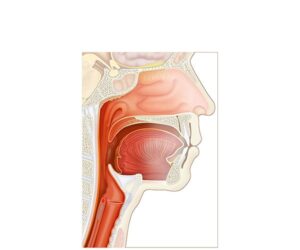
Pharyngeal inflammation
24,50 € Add to basketThe pharyngeal inflammation has an altered function in swallowing
and breathing. Moreover, under normal conditions, the pharynx
allows proper passage of air and food. Additionally, it participates
in voice production. -
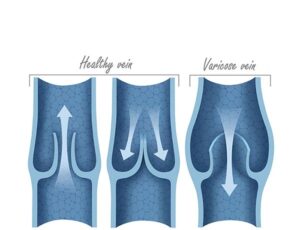
Phases of venous valves
24,50 € Add to basketPhases of venous valves. Comparison between the normal valve
and varicose veins, where the valve failure causes blood reflux,
blood accumulation, venous dilation, and symptoms such as pain,
swelling and heaviness. -
Phases of venous valves
24,50 € Add to basketPhases of venous valves in their normal and varicose state.
This technical description details the functioning of valves in
healthy veins versus damaged ones. The text explains the
process of blood reflux, blood accumulation, and the venous
dilation that characterizes varicose veins. -
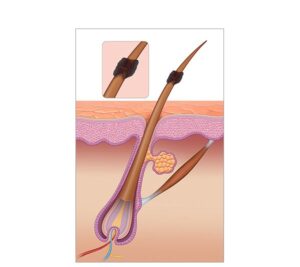
Piedraia hortae infection
24,50 € Add to basketPiedraia hortae infection is a superficial fungal condition causing
dark, hard nodules on the hair shaft. Moreover, it mainly affects the
scalp and may lead to hair fragility without significant inflammation. -
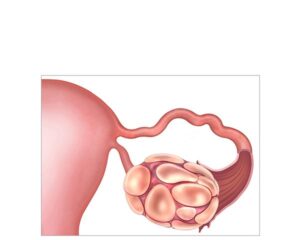
Polycystic ovaries
24,50 € Add to basketPolycystic ovaries are a hormonal condition where multiple cysts
develop in the ovaries. It causes hormonal imbalance, irregular cycles,
excess hair growth, and may affect fertility and metabolism. -
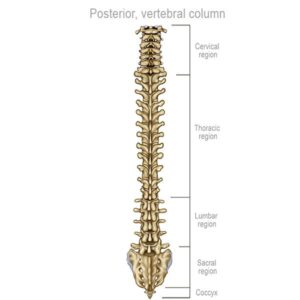
Posterior vertebral organization
24,50 € Add to basketPosterior view of the vertebral structure, highlighting its essential
function for mobility. Composed of cervical (C1-C7), thoracic (T1-T12),
lumbar (L1-L5), and sacral (S1-S5) vertebrae, and the coccyx, this
structure extends from the nape of the neck to the base of the back. -
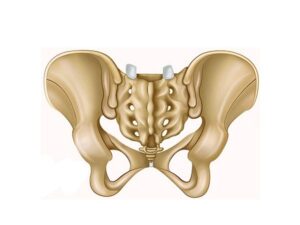
Posterior view of the hip
24,50 € Add to basketPosterior view of the hip. This vital joint connects the femur
to the sacrum, a triangular bone at the base of the spine. This
complex connection allows essential movements such as flexion
and rotation. -
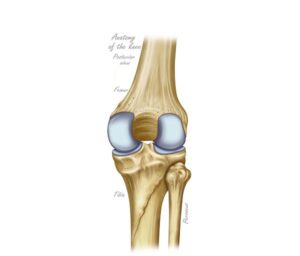
Posterior view of the knee
24,50 € Add to basketPosterior view of the knee. Technical illustration detailing the
back of the joint, including the femur, tibia, and fibula. The image
shows the structures necessary for flexion and leg biomechanics,
serving as an essential tool for evaluating functions and injuries. -
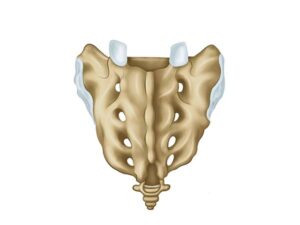
Posterior view of the sacrum
24,50 € Add to basketPosterior view of the sacrum: the triangular region at the bottom
of the spine. Numbered S1-S5, it features the median sacral crest,
intermediate and lateral crests, and four pairs of posterior sacral
foramina. -
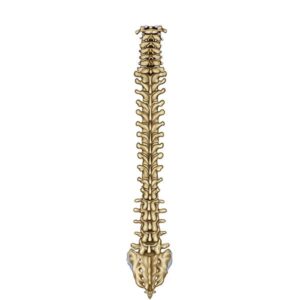
Posterior view of the spine
24,50 € Add to basketPosterior view of the spine. This structure is essential for mobility
and comprises the cervical vertebrae (C1–C7), thoracic (T1–T12),
lumbar (L1–L5), sacral (S1–S5), and coccyx. From the nape of the
neck to the lower back, it provides support and houses the spinal cord. -
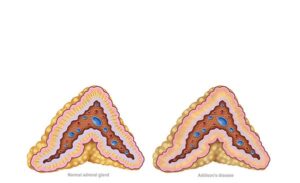
Primary adrenal insufficiency
24,50 € Add to basketPrimary adrenal insufficiency: a disorder where the adrenal glands
lose activity in the glomerular and fascicular layers. This prevents cortisol
and aldosterone production due to immune failure. It requires lifelong
hormonal treatment to regulate metabolism and blood pressure.