Nerves
Showing 37–48 of 251 results
-
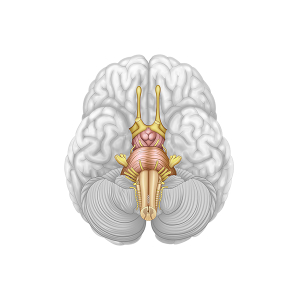
Brain stem bottom view
24,50 € Add to basketThe inferior view of the brainstem shows the lower
part of this crucial neural structure. First, it includes
the medulla oblongata, the pons, and the midbrain.


-
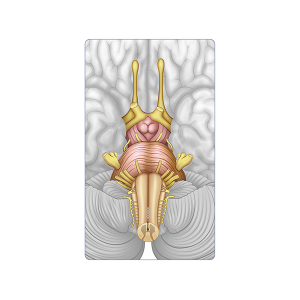
Brain stem bottom view
24,50 € Add to basketThe inferior view of the brainstem shows the lower
part of this crucial neural structure. First, it includes
the medulla oblongata, the pons, and the midbrain. -
Brain stimulator in Parkinson’s disease
24,50 € Add to basketThe brain stimulator in Parkinson’s disease has a therapeutic
function in controlling motor symptoms. Moreover, under normal
conditions, dopamine regulates voluntary movement. -
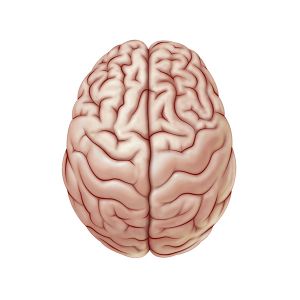
Brain top view
24,50 € Add to basketSuperior view of the brain. This illustration provides
a detailed view of the structures located in the upper
portion of the encephalon. From this perspective, the
gyri and sulci of the brain can be clearly observed. -
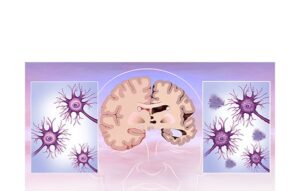
Brain with Alzheimer’s disease
24,50 € Add to basketThe brain with Alzheimer‘s. In this representation, the cerebral
hemispheres are compared between a healthy brain and another
neuron, beta-amyloid plaques affected by Alzheimer’s, the
neurofibrillary tangles of tau, and the cerebral cortex. -
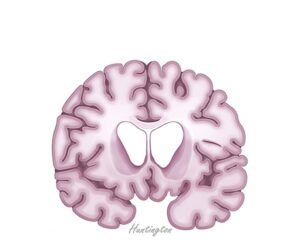
Brain with Huntington’s disease
24,50 € Add to basketThe brain with Huntington’s disease has an altered function in
the nervous system. Moreover, under normal conditions, neurons
maintain efficient communication. Additionally, they support motor
control and cognitive functions. -
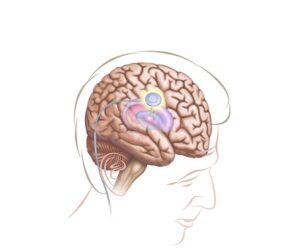
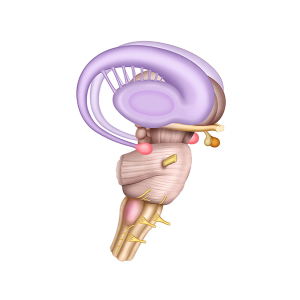
Brainstem and Basal Ganglion
24,50 € Add to basketRepresentation of the human head and the limbic
system shows the location of these structures
within the brain and key components such as the
hippocampus, amygdala, and hypothalamus. -
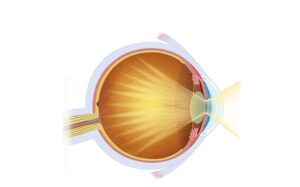
Cataract focusing
24,50 € Add to basketThe cataract focuses. This is affected when the lens, the eye’s
natural lens, becomes cloudy. Cataracts can blur vision, cause hazy
sight, and impair the ability to focus properly. -
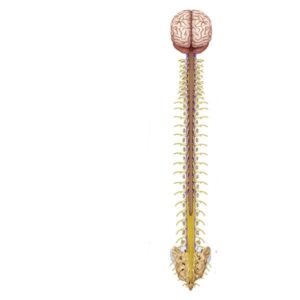
Central nervous branching
24,50 € Add to basketCentral nervous branching represents the extension of
nerves that originate from the central nervous system and
reach different regions of the body. The central nervous
system is composed of the brain and the spinal cord -
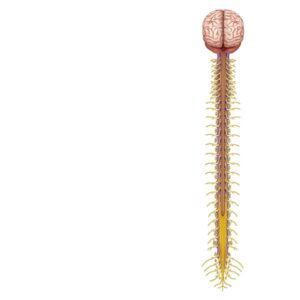
Central nervous system
24,50 € Add to basketThe central nervous system represents the extension of
nerves that originate from the central nervous system and
reach different regions of the body. The central nervous
system is composed of the brain and the spinal cord -
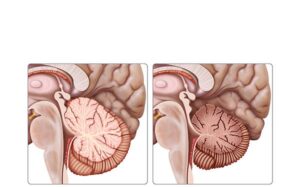
Cerebellar hypoplasia
24,50 € Add to basketThe cerebellar hypoplasia has an altered function in motor control.
Moreover, under normal conditions, the cerebellum regulates
coordination and balance. Additionally, it allows precise and smooth
movements. Furthermore, it maintains body stability. -
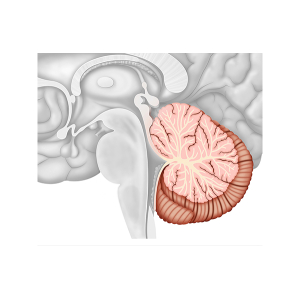
Cerebellum and brainstem
24,50 € Add to basketThe cerebellum and the brainstem are essential structures
of the central nervous system that play a crucial role in motor
coordination and balance. These structures are located at the
base of the brain.