Marrow
Showing 61–72 of 183 results
-
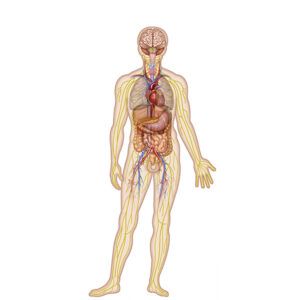
Innervation of vital organs
24,50 € Add to basketThe innervation of vital organs represents the complex
network of nerve connections that allows communication
between the central nervous system and the essential
organs of the human body.


-
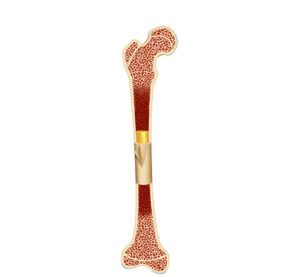
Internal anatomy of the femur
24,50 € Add to basketInternal structure of the femur. It highlights anatomical features such
as the bone marrow, the femoral neck, the bone trabeculae, and the
proximal and distal epiphyses. This diagram provides an overview of
the internal structure of the femur, with biomechanics and blood cells
production playing a fundamental role. -
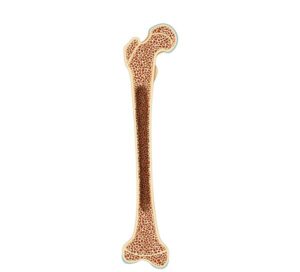
Internal section of the femur
24,50 € Add to basketThe cross-section of the femur provides a detailed illustration
of the internal anatomy of this thigh bone. Structures such as the
bone marrow, the femoral neck, the bone trabeculae, and the
distal and proximal epiphyses are highlighted. -
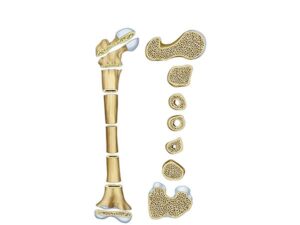
Internal structure of the femur
24,50 € Add to basketInternal structure of the femur, focusing on the walls that make up
its internal structure. Through cross-sectional views, it reveals the
different layers, thicknesses, cancellous bone, and the space occupied
by the bone marrow. The femoral neck and head are vital for the
hip joint. -
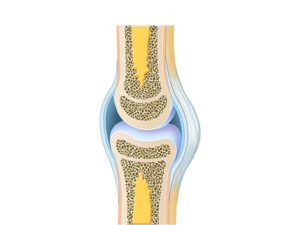
Knee and cartilage
24,50 € Add to basketThe knee and cartilage demonstrate the anatomical structure that
enables movement and shock absorption. The knee is composed
of the femur, tibia, and patella, along with the menisci and articular
cartilage, which protect the bones from wear and tear. -
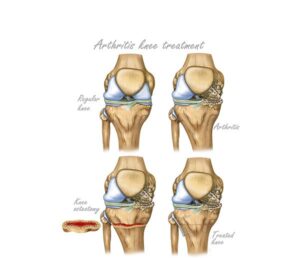
Knee osteotomy treatment
24,50 € Add to basketKnee osteotomy treatment is a surgical procedure that corrects
bone alignment to relieve pain and improve joint function. Moreover,
it redistributes load in early osteoarthritis and may delay the need for
knee replacement surgery. -
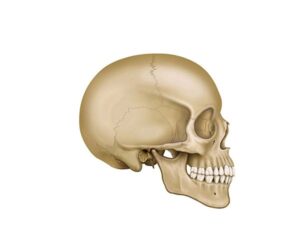
Lateral skull view
24,50 € Add to basketThe lateral skull shows frontal, parietal, and occipital bones,
protecting the brain and providing structural support and
facial shape. -
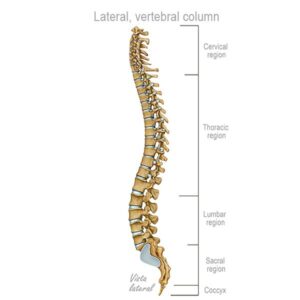
Lateral vertebral classification
24,50 € Add to basketLateral view of the vertebral column. This reveals a structure
composed of cervical (C1-C7), thoracic (T1-T12), lumbar (L1-L5),
and sacral (S1-S5) vertebrae, as well as the coccyx, which together
form the human spine. The natural curvature provides both support
and flexibility. -
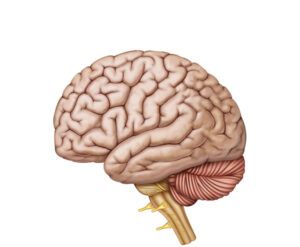
Lateral view of the brain
24,50 € Add to basketLateral view of the brain. This anatomical representation shows
the main sulci and lobes of the nervous system. The structure
includes the frontal, parietal, temporal, and occipital sectors. Each
area manages specific processes such as memory, sensory
perception, and cognition. -
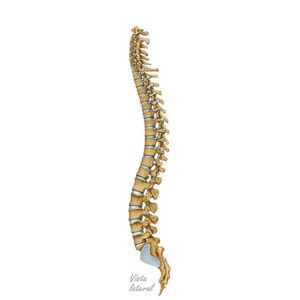
Lateral view of the spine
24,50 € Add to basketLateral view of the spine. It shows the segmented structure of the
vertebrae that make up the human back. It consists of cervical
vertebrae (C1–C7), thoracic vertebrae (T1–T12), lumbar vertebrae
(L1–L5), sacral vertebrae (S1–S5), and the coccyx. Its natural
curvature provides support and flexibility. -
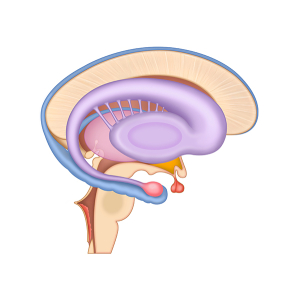
Limbic brain structures
24,50 € Add to basketThe limbic structures of the brain are composed
of several interconnected regions that regulate
emotions, memory, and behavior. First, they
include the hippocampus, which is essential
for memory and learning.
-
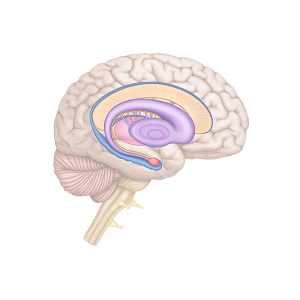
Limbic system
24,50 € Add to basketThe limbic system is a group of brain structures that
regulates emotions, memory, and behavior. First, this
system includes regions such as the hippocampus,
the amygdala, and the hypothalamus.