Showing 685–696 of 1048 results
-
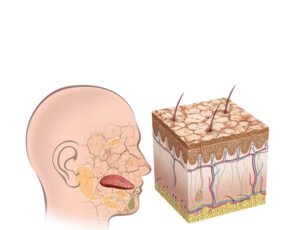
Sjögren’s skin dryness
24,50 € Add to basketSjögren’s skin dryness describes the skin dehydration caused by an
autoimmune attack on secretory glands. This condition, more
common in women, causes roughness, itching, and a weakened
skin barrier, accompanied by the lack of tears and saliva.


-
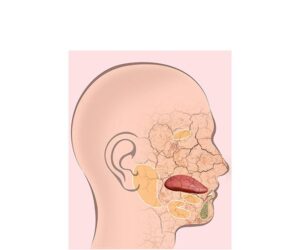
Sjögren’s skin dryness
24,50 € Add to basketSjögren’s skin dryness is an autoimmune condition where the immune
system attacks the glands that produce moisture. This drastically
reduces tears and saliva, leading to rough skin, irritated eyes, and
a generalized feeling of bodily dryness. -
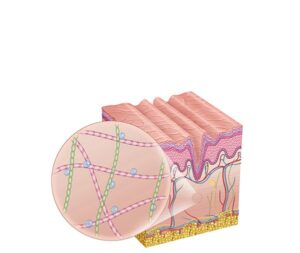
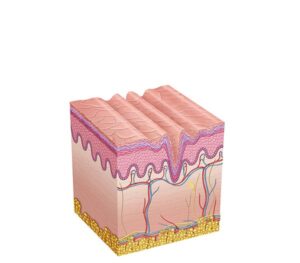
Skin aging
24,50 € Add to basketSkin aging: this natural process leads to the loss of collagen, elastin,
and essential oils. The formation of wrinkles and thinning of the
epidermis are key signs caused by age and the sun. The use of sunscreen
is vital to mitigate these biological effects effectively. -
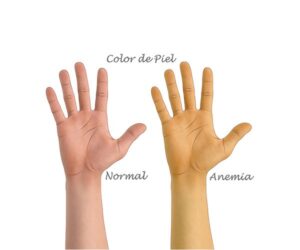
Skin color in anemia
24,50 € Add to basketSkin color in anemia: an alteration where the lack of hemoglobin
and oxygen causes a pale or yellowish tone. Iron deficiency is clearly
reflected in the skin and the inside of the eyelids. It requires medical
diagnosis and supplementation. -
Skin deterioration
24,50 € Add to basketSkin deterioration: this biological process involves collagen loss,
dryness from lack of oils, and thinning of the epidermis. Wrinkle
formation and spots are common signs of cumulative sun exposure.
The use of sunscreen is vital to mitigate these aging effects effectively -
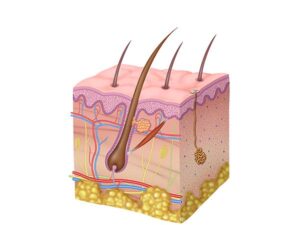
Skin physiology
24,50 € Add to basketSkin physiology explains how the epidermis, dermis, and
hypodermis, along with glands, vessels, and nerves, protects
the body, regulates temperature and enables sensory perception. -
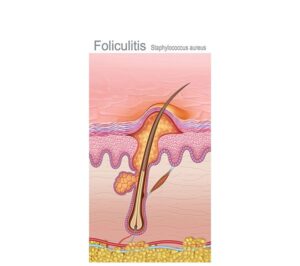
Skin with folliculitis
24,50 € Add to basketSkin with folliculitis. This illustration highlights the inflammation
of hair follicles, characterized by pustules and red bumps. The content
describes the bacterial and irritative causes, emphasizing the importance
of hygiene and specific treatments to preserve skin health. -
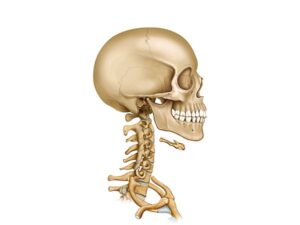
Skull and cervical vertebrae
24,50 € Add to basketThe skull and cervical vertebrae. The skull, composed of
the frontal, parietal, and occipital bones, protects the brain and
houses the sensory organs. The cervical vertebrae, located in the
neck region, form the spinal column. -
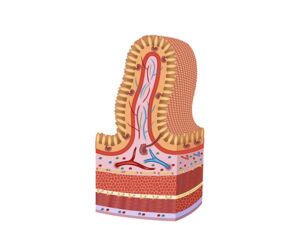
Small intestine villus
24,50 € Add to basketSmall intestine villus hair refers to microvilli on enterocytes
that increase the absorption surface. They enable efficient
nutrient uptake from digested chyme in the digestive system. -
Somatosensory cortex
18,50 € Add to basketThe somatosensory cortex is the region of the brain that
processes sensory information from the body,
such as touch, pressure, and temperature, and allows
the location of stimuli to be interpreted.


-
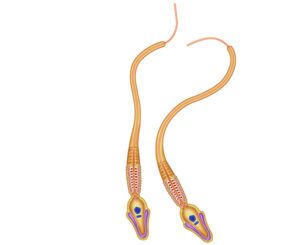
Sperm cell anatomy
24,50 € Add to basketSperm cell anatomy: a cell with a head containing DNA and an
acrosome, a midpiece with mitochondria, and a flagellated tail for
movement, produced in the testes and matured in the epididymis. -
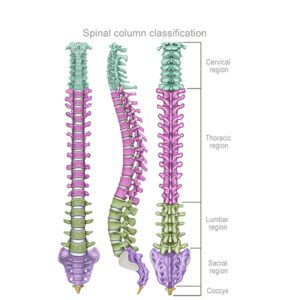
Spinal column classification
24,50 € Add to basketThe spine is classified based on its anatomical segments:
cervical, thoracic, lumbar, sacral, and coccygeal. The cervical
region (7 vertebrae, C1–C7), the thoracic region (12 vertebrae,
T1–T12), the lumbar region (5 vertebrae, L1–L5), and the sacral
region (5 vertebrae, S1–S5).