Nerves
Showing 205–216 of 251 results
-
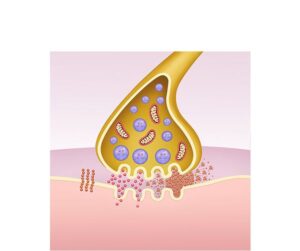
Synapse in Alzheimer’s disease
24,50 € Add to basketThe synapse in Alzheimer’s disease has an altered function in
neuronal communication. Moreover, under normal conditions,
synapses allow efficient signal transmission. Additionally, they
support memory and learning.


-
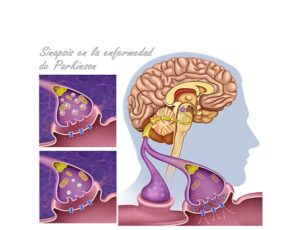
Synapse in Parkinson’s disease
24,50 € Add to basketParkinson’s disease. It is characterized by the loss of dopamine-producing
cells in the brain. This dopamine deficiency leads to motor and non-motor
symptoms, such as balance problems and cognitive alterations. -
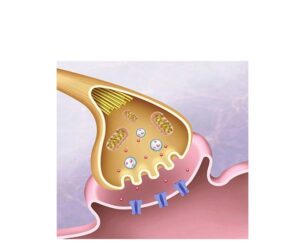
Synapse in Parkinson’s disease
24,50 € Add to basketThe synapse in Parkinson’s disease has an altered function in
neuronal transmission. Moreover, under normal conditions,
dopamine acts as an essential neurotransmitter. Additionally,
it facilitates communication between neurons. -
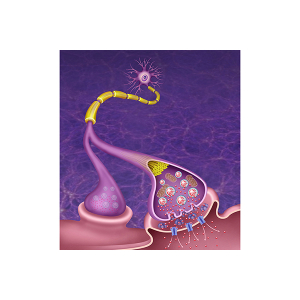
Synaptic Schema
24,50 € Add to basketThis synaptic schema visually represents the
functional connection between two neurons during
the process of neuronal communication. -
Tanning from solar radiation
24,50 € Add to basketTanning from solar radiation is the skin’s response to UV
exposure, where melanocytes produce melanin to darken
skin and protect against DNA damage. -
Template (Copy)
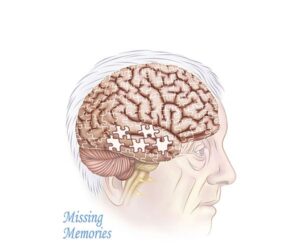
24,50 € Add to basketAlzheimer’s disease and lost memories have an altered function in
cognitive processes. Moreover, under normal conditions, neurons
communicate efficiently. Additionally, they store and retrieve
information. -
The amblyopia
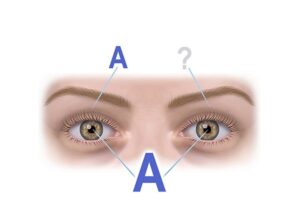
24,50 € Add to basketAmblyopia is described as a condition in which one eye does
not develop properly during childhood, also known as “lazy eye.”
This leads to reduced vision even with optical correction. -
The amblyopic vision
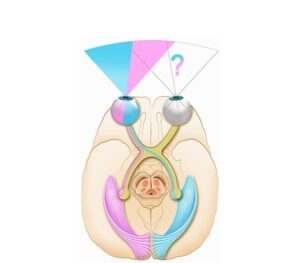
24,50 € Add to basketVision with amblyopia, a condition in which one eye does not
develop correctly during childhood, causing a decrease in vision
even with optical correction. Strabismus or differences in the
graduation between both eyes can contribute to this condition. -
The amblyopic vision
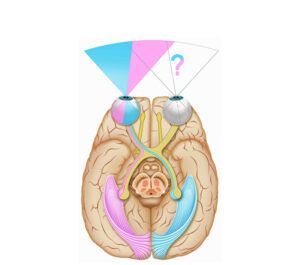
24,50 € Add to basketThe vision in amblyopia, also called “lazy eye“, shows a
condition in which one of the eyes does not develop properly
in childhood, resulting in decreased vision even with optical
correction. -
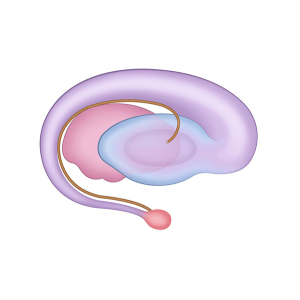
The basal ganglia
24,50 € Add to basketThe basal ganglia are a set of brain nuclei
that play a crucial role in regulating movement
and motor coordination. They are located on
either side of the thalamus. -
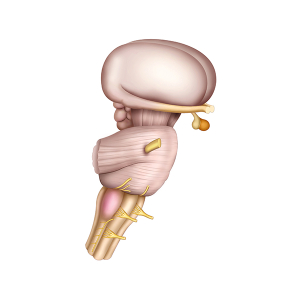
The brain stem
24,50 € Add to basketThis illustration shows the brainstem. First, this
structure is vital for the basic functions of the
nervous system. Additionally, it is located at the
base of the brain and connects the encephalon
with the spinal cord. -
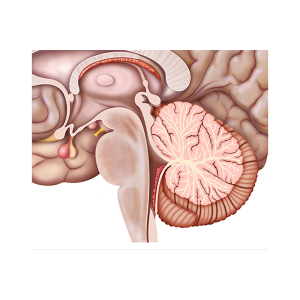
The brain stem
24,50 € Add to basketRepresentation of the human head and the limbic
system shows the location of these structures
within the brain and key components such as the
hippocampus, amygdala, and hypothalamus.